Chinese suppliers build a large share of the world’s palletizing capacity now, and the price difference is real. So is the risk difference. What follows is the checklist we tell buyers to run, including the parts that make us look slower to close a deal.
1. Establish whether you are talking to a factory
Trading companies are not automatically bad, but they change who fixes your machine at 2am. Ask for, and verify: the business licence scope (manufacturing, not just sales), the address of the production site with a video call taken live from the assembly floor, the name of the electrician who wired your machine class, and whether the pedestal is welded on site or bought in. A broker will hedge on at least two of these.
2. Read the component list, not the brochure
The quotation should name brands and model numbers for: robot arm, servo drives and motors, PLC CPU and HMI, air components, safety relays, cables and the gripper’s wear parts. Where it says a brand, ask for the authorised-reseller invoice reference for a recent build in your country. Substitutions with ‘equivalent’ parts are the standard way a cheap quote becomes an expensive machine.
3. Test before shipment, and make it contractual
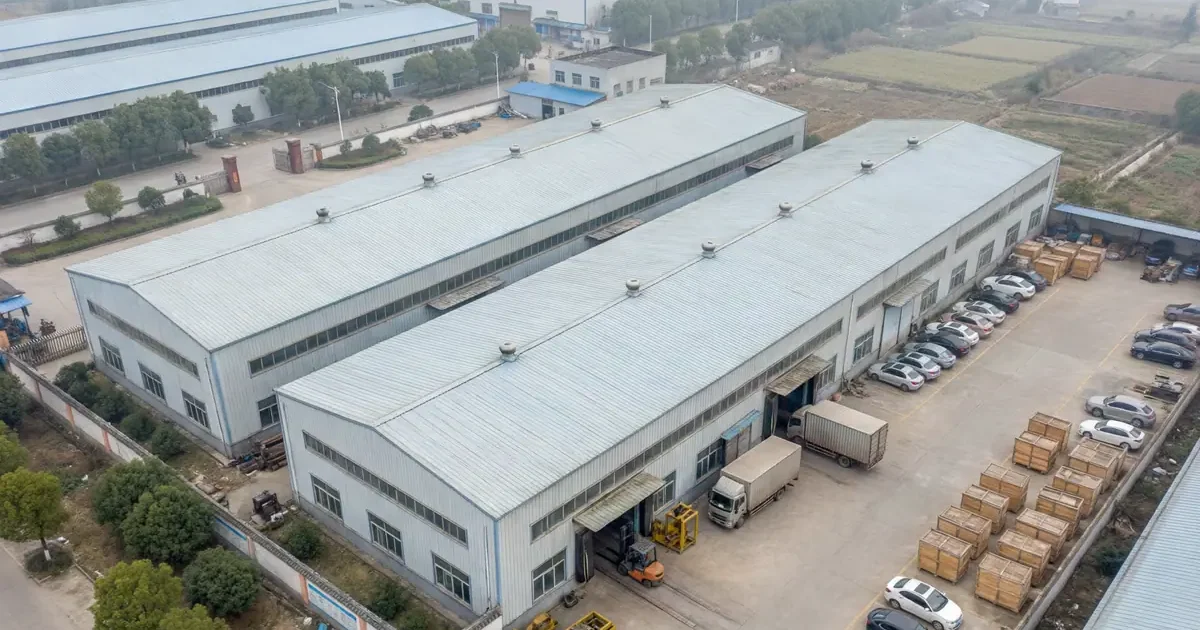
Insist in the purchase order on a factory acceptance test at your bag weight and your stacking pattern, run long enough to heat the machine — eight hours is a sensible minimum. Require the test log, photographs of the finished stack, and a video call witness. Our builds go through exactly this, and the log ships with the machine; see the factory tour for what that line looks like.
4. Get the interface right before the robot arrives
Most commissioning delays are not the robot. They are the conveyor height, the upstream bagger signal list, the pallet supply, compressed-air quality, the incoming power spec (voltage, frequency, earthing), and the floor slab. Ask for the foundation drawing and the electrical specification in the design phase, before the machine is built. If your line is not new, send photographs of the space.
5. Incoterms and landed cost
Compare FOB, CIF and DDP on the same machine, and be honest about hidden cost: inward inspection, the crate and skid, port handling, inland trucking to a plant with low bridges, and import duty classification. A palletizing robot is normally shipped as machinery, but a line sold as one assembled unit can be classified differently. Ask your own customs broker, not the supplier, to confirm.
6. Service coverage is the real warranty
A two-year warranty is worth nothing if the parts and the engineer take three weeks to arrive. Ask: what is stocked on the supplier’s side, what lead time for the reducer if it fails, whether remote video support is free and in what hours, and whether an independent local integrator is authorised to work on the control system without voiding cover. Put the response commitment in writing.
7. Payment structure that matches the risk
Deposit plus balance before shipment is standard. Where a buyer wants protection, use a platform with order assurance, or a letter of credit for larger lines, or hold back a commissioning-linked tranche. A supplier who refuses any milestone tied to a witnessed FAT is telling you something.
What we commit to
Named components on every quotation, a witnessed eight-hour hot test before shipment, engineer travel for installation and operator training, a one-year parts-and-labour warranty, lifetime free remote support, and ten-year spare-parts availability. That is on the support page so you can hold us to it. Start with the quote form and send your bag and pallet numbers.