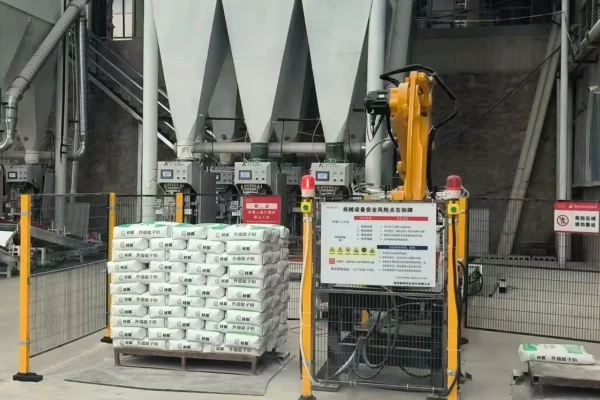
Fertilizer combines the two things palletizers dislike: bags that are heavy and deformed, and an atmosphere that attacks metal and electronics. Urea prill in a 50kg woven bag is our most common fertilizer job.
What we typically install
A 4-axis 180kg arm stacking two 50kg bags per pick, row-lock pattern, with slip sheets on the top layers for container-bound exports. The fertilizer bag stacker crane is the build most often specified here, and where the plant also packs 25kg speciality grades, an adjustable-stop gripper covers both sizes.
Sector-specific problems we design around
- Corrosivity. Ammonia-bearing dust and humidity attack bare steel and contacts. We use coated frames, stainless fixings in the exposed zones, and a panel with a proper filtration path.
- Fluidising urea. Fresh urea bags are almost liquid. Grip geometry and the squaring station do more for stack stability than the robot’s repeatability figure.
- Cold-clause caking. Bags stored in a cool warehouse behave differently from bags just filled; test the pattern with both.
- Export stacks. A pallet that travels 3,000 nautical miles must survive without interlayer film if the customer does not use it, so the pattern is designed for friction, not for luck.
Result we plan for
Fewer rejected stacks at the port, and a pallet end that no longer sets the plant’s hourly ceiling. The worked fertilizer case study shows the numbers we start from, and the palletizing range lists the machine classes.