Feed milling is the cleanest case for robotic palletizing: a small number of bag types, very high repetition, and a physical handling job that plants struggle to keep staffed.
What we typically install
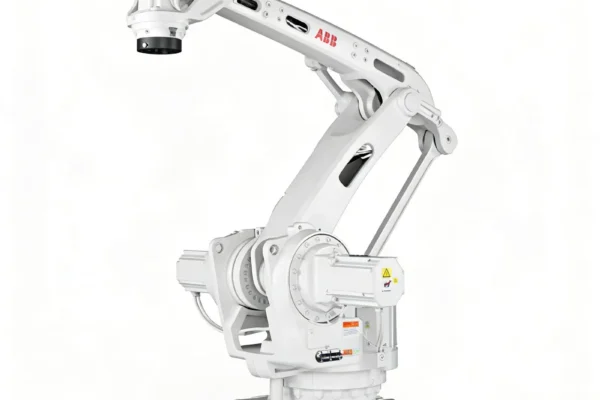
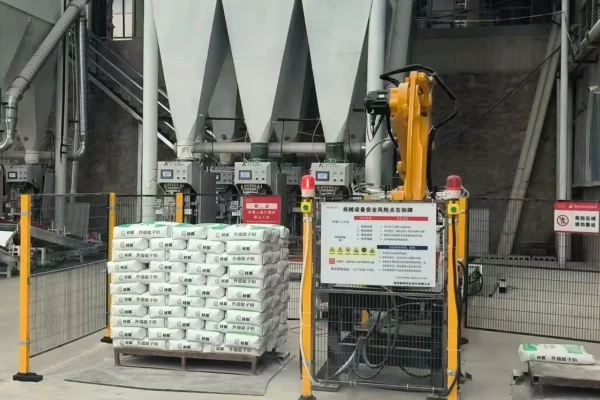
50kg woven PP and paper-laminated bags off an open-mouth bagger, at 600–800 bags per hour, stacked 2×2 or 3×2 per layer onto a 1200×800 or 1200×1000 pallet. A 180kg 4-axis arm with a scissor bag gripper covers double-bag pick-up with headroom, which is the usual specification here — see the 180kg 4-axis robot palletizer and the PLC palletizing arm.
Where a mill runs a micro-ingredient or premix line in 25kg bags, the same arm with an adjustable jaw stop handles both sizes off stored patterns.
Sector-specific problems we design around
- Feed dust. Abrasive, and everywhere. Panels are sealed or purged, cable dressing avoids dust traps, and filter changes have a documented interval.
- Oily and molasses-coated bags. They smear and are slippery when warm; pad material and grip force are chosen for this, not for a clean laboratory bag.
- Multiple bag suppliers. Bag dimensions vary between suppliers. Adjustable grippers and stored patterns keep changeover under fifteen minutes.
- Seasonal peaks. A line sized only for average output stalls in the season rush, so we quote against the peak rate you tell us about.
Result we plan for
Two to four pallet-end roles redeployed, no more carry-back of collapsed stacks, and a pallet that arrives at the farm or the customer square and intact. For the underlying machine choices read our palletizing range, and the guide on sizing a robot for a feed mill.