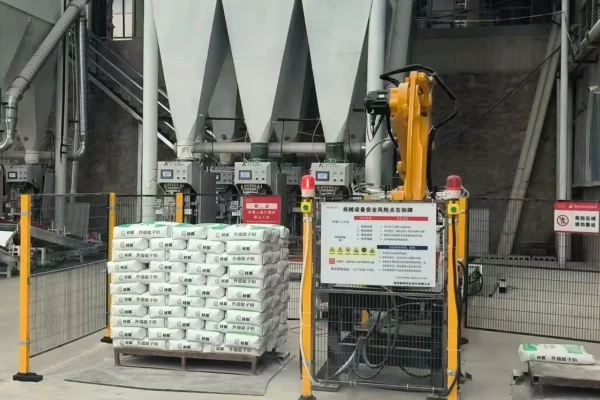
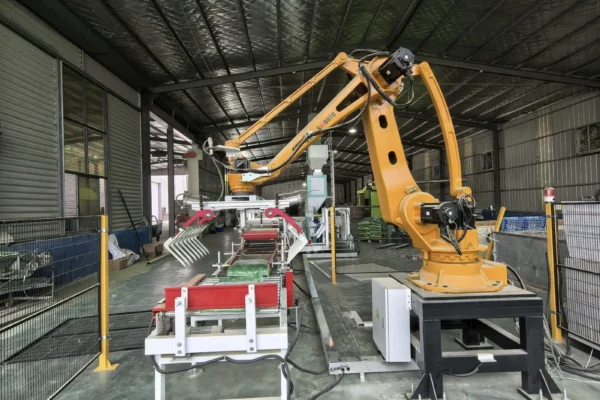
Chemical and pigment packing is where the specification has to be argued in writing. Products vary from free-flowing granules to dusty pigments that bridge, the hall may be classified, and the pallet usually goes into a container.
What we typically install
25kg valve or open-mouth bags stacked two or four per layer onto a 1200×800 pallet, with a bag-softening or consolidation station upstream where the product is aerated. The PLC palletizing arm and the 180kg 4-axis palletizer cover most chemical duty; a pallet changer and in-line stretch wrapper handle the container pattern.
Sector-specific problems we design around
- Area classification. If your hall is zoned, the motor, panel and brake specification must match. We design to the zone you declare, and put the certification requirement in the quotation, not in an email later. Read the guide on PLC and panel selection for what belongs on that list.
- Corrosive atmosphere. Halogen and sulfur-bearing dusts attack standard coatings; we use coated frames, sealed conduits and stainless hardware in the exposed zone.
- Aerated bags. A pigment bag fresh off the valve is a balloon. Grip strategy and the delay before pick matter more than repeatability.
- Spill access. The machine must be washable and must not create a bund-trapping pedestal.
- Bag supplier variation. Different woven bags, different friction, different stack behaviour. Patterns are stored per bag source, not fixed.
Result we plan for
Container loads that arrive without settlement, and a packing end that a hazardous-area inspector signs off. For the bagging side, see open-mouth versus valve-mouth and our packaging machinery.